Showing posts with label CCAFS. Show all posts

Friday, May 6, 2016

Sometimes you need to rest and let the rockets fly as they may #JCSAT14 #SpaceX #Falcon9

Even though it would have taken a simple alarm and sitting up in bed to look at the window, we missed this launch as we were all sick and needed our rest. I actually thought that we would be woken up by the rumble, but not this time. With a long launch window as well, it could have turned into a very long night. Just to gauge how sick we were, I stayed home from hockey the previous Friday night and I rarely miss hockey! I did head dow to Port Canaveral to snap a few photos of the first stage after it returned from landing on a barge in the Atlantic Ocean. It was an impressive site to see the scale of the first stage compared to the tiny workers at it's business end preparing the hardware to get loaded on a flatbed truck a few days later. Another notable milestone is that this may have been the 50th launch since Jen and I moved to Florida in Sept 2012. I will need to check the stats and figure out when the 50th launch we "not miss" will occur. As I write this month-late blog entry, another first stage has arrived at the Port! The pace of space is picking up, and the place for space is the Space Coast!

Twitter original text: She's still got legs. SpaceX Falcon 9 1st stage at Port Canaveral from #JCSAT14 launch. #CapeLife #Falcon9 #SpaceX

Thursday, February 12, 2015

My best pics of #DSCOVR launch. 3rd time's a charm for @SpaceX #Falcon9

We experienced a beautiful +SpaceX launch of DSCOVR as the sun set behind us. It was my third trip to the ITL Causeway, 2nd for +Jen Kobrick (and #BabyK) and +Caley Burke. This was the 32nd launch since we moved to Florida (Sept 2012). The rocket jumped off the pad, gave a booming crackle, and had a long flight in perfect view on a clear evening. The most amazing part was seeing the first stage re-light just above the Delta IV launchpad in the far distance as SpaceX was practicing their landing maneuver out in open water, a critical step in rocket reusability (mostly to reuse the 9 engines). The seas were rough, so they didn't attempt to land on the autonomous spaceport drone ship (barge) newly named "Just Read the Instructions" as a sci-fi tribute. As per usual, I like to retell the story with photos:

Feb 8 - Scrub #1 - The plan: a romantic kiss on date night with the launch behind us.  But a squishy nose scrub kiss is just as good.

Tuesday, January 20, 2015

#MUOS3 launch on #AtlasV from the ITL Causeway

A spectacular night launch once again (really, can a night launch suck?) and I watched with my friend Ryan from the CCAFS ITL Causeway. I have to admit that I didn't read up on the launch before hand, but I did know there were 5 solid rockets in this Atlas configuration. This was the 31st launch since Jen and I moved to Florida in Sept. 2012, 28 of which I've watched (29 if you include hearing it in the middle of the night).

I'm pretty happy about this fluke exposure during the launch countdown and I inadvertently learned a zoom trick for focusing the lens. 
This is a composite of two 30-second exposures overlaid on a dark exposure. Playing with the filters, this one stood out as a fire bird heading to space.
The rocket is actually heading towards the bottom of the image. Orion is in the top right corner. There are three 30-second exposures overlaid.

The official stats:
Jan. 20/21Atlas 5 • MUOS 3
Launch time: 0043-0127 GMT on 21st (7:43-8:27 p.m. EST on 20th)
Launch site: SLC-41, Cape Canaveral Air Force Station, Florida
A United Launch Alliance Atlas 5 rocket, designated AV-052, will launch the third Mobile User Objective System (MUOS) satellite for the U.S. Navy. Built by Lockheed Martin, this U.S. military spacecraft will provide narrowband tactical communications designed to significantly improve ground communications for U.S. forces on the move. The rocket will fly in the 551 vehicle configuration with a five-meter fairing, five solid rocket boosters and a single-engine Centaur upper stage. [Jan. 12]
Space!
Ryan

Saturday, January 10, 2015

Lucky 7. Florida Tech's #SABOL (#ISSRC payload) off to #ISS on #CRS5. Go #Dragon!

+Florida Institute of Technology's payload SABOL, Self-Assembly in Biology and the Origin of Life (A study into Alzheimer’s), was +Space Florida's 7th sponsored payload winner from the International Space Station Research Competition, flying with +NanoRacks launched on +SpaceX's Falcon 9 inside the Dragon capsule. The experience is best retold in photos and videos. This program has been the most rewarding experience I have had at Space Florida with the opportunity to be a tangent-team member to 7 ISS payloads, and as one team politely commented, their shepherd.
"Congratulations on shepherding us into orbit!"
 To learn more about the ISSRC winning teams please visit: http://www.spaceflorida.gov/iss-research-competition/issrc-teams
The ISSRC was run by Space Florida and designed to inspire innovation as well as provide unique research opportunities and access to the ISS.

Friday, December 5, 2014

#Orion #EFT1 milestone launch sets the stage for the future of human spaceflight from Florida

The stage was set for +NASA Orion's maiden voyage, but a stray boat, weather delays and engine valve issues scrubbed the first launch attempt on Dec. 4th after exhausting the long launch window. The early morning launch window would have to be repeated the following day adding to the delirium of a long week. The night of the 4th I also ran a +Yuri's Night Space Coast Fundraiser where the proceeds will seed-fund teachers and events in the area to host events around April 12th, the anniversary of human spaceflight. The lack of sleep from the late night party and early Dec 5th morning added to the excitement of the imminent launch. The weather was stormy at 5am when we woke up (hours after tourists and VIPs had loaded on buses for the Kennedy Space Center viewing locations). We loaded up the van and headed to the Cape Canaveral Air Force Station Skid Strip (landing strip in the middle of their station) to for the second attempt. The crowd was about half the previous morning but just as excited. The weather was looking great and I think the experienced crowd at CCAFS knew that everything was on track for launch. Sure enough, the countdown proceeded and it was all systems go for launch! United Launch Alliance's Delta IV Heavy rose like a giant building with three bright streams of fire below it. We watched it arc over us and towards space carrying Orion on a historic maiden voyage. The ‪#‎EFT1‬ (Exploration Flight Test 1) circled our planet twice before making a fiery re-entry into the Pacific Ocean. The images and videos of our planet were fantastic, a glimpse of what future astronauts may see. Look for those on +NASA's sites and across the social media-verse! This mission was particularly important for human spaceflight as it tested critical systems that are helping with the final design of the human-rated vehicle. The crowds were big, but not exactly Shuttle-like as predicted. They were significant compared to other launches. I was very happy to experience this slice of human spaceflight history. A very important part of this mission was that it did raise a lot of awareness for human spaceflight and it did energize the space community. The big question is, how long will that last and will it be enough until the next milestone event. A lot of people have been discussing "who will be first" between Lockheed's Orion and the capsules funded by NASA's Commercial Crew Program (SpaceX's Dragon and Boeing's CST-100), but personally, I like to think about a near-future where we can ask "who will be second? Third?" Go Orion!

Two birds in the air, but one heading for space and into the history books.
A look at the Delta IV Heavy and it's fiery triple tail slowing ascending with Orion snug up top.
A fun pic when the bird crossed the path of the rocket and it looked like a bird-shish-kabob

The official stats:
Dec. 5 Delta 4-Heavy   •  Orion EFT-1
Launch time: 1205 GMT (7:05 a.m. EST)
Launch site: SLC-37B, Cape Canaveral Air Force Station, Florida

A United Launch Alliance Delta 4-Heavy rocket will launch NASA's Orion multi-purpose crew vehicle on Exploration Flight Test-1. The uncrewed test flight of the Orion spacecraft will reach an altitude of 3,600 miles before re-entering the atmosphere to demonstrate the capsule's heat shield. The largest of the Delta 4 family, the Heavy version features three Common Booster Cores mounted together to form a triple-body rocket. Delayed from September. Scrubbed on Dec. 4. See our Mission Status Center. [Dec. 5]

Space!
Ryan

Tuesday, September 16, 2014

CLIO launch to space on an Atlas 5

Seth and I watched from the CCAFS ITL Causeway, it was his first launch up close even though he has lived in Florida his whole life. The window started at 5:44pm and the weather delays pushed it right to the window end at 8:10pm. It was a beautiful night launch. I was busy giving everyone around us updates and unfortunately I had my camera turned off for the most important few minutes, the actual launch! That photo-miss left a bitter taste in my mouth, but that would be soon forgotten with the upcoming SpaceX launch of CRS-4! I did happen to get the launch on my iPhone in "HD" and it was really cool to be able to see the rocket's flame through the cloud deck as it streaked away and punched through each layer. It's also fun to watch the lens flare in the video. We also saw a large alligator swimming back and forth along the inlet watching the launch watchers. There was a Dolphin to the south as well for the full nature show. Seth was super excited about the experience (so was I except missing the photo) and that's what launch viewing is all about!

Rocket avec gator.
Whoops! This was an unfortunate user error...


The official stats:
Sept. 16/17 Atlas 5  •  CLIO
Launch time: 0010 GMT on 17th (8:10 p.m. EDT on 16th)
Launch site: SLC-41, Cape Canaveral Air Force Station, Florida

A United Launch Alliance Atlas 5 rocket, designated AV-049, launched the CLIO mission on a commercial flight for a U.S. government customer. See our Mission Status Center. [Sept. 16]

Space!
Ryan

Tuesday, August 5, 2014

Red sky at morn, sailors be warn. Missed the #SpaceX #AsiaSat8 launch, but the rumble woke me up!

Strike three. That's three missed launches in a row, but at least the rumble from the rocket woke me up at 4am so I experienced part of the launch and acknowledge that it actually did happen. I set my alarm for the beginning of the launch window at 1:25am and was up in time to test my camera (see image below). I was dazed and following updates on Twitter tagged with #SpaceX and #AsiaSat8, but then the time came and went and the launch was aborted at T-12 seconds! I saw tweets that the media was being escorted off base and to me that indicated at least a 30-min delay before another attempt could be made. I wasn't willing to stay up all night with an unknown launch window, so I decided to call it a night. Three launches in a week is pretty fantastic even if I missed watching them all!

Red sky at night is usually sailor's delight, but not today. I guess since it was 1:20am that "red sky at morn, sailors be warn" is more appropriate. This moment was captured leading up to the T-12 seconds abort of +SpaceX's Falcon 9 rocket waiting to launch AsiaSat 8. It did finally go at 4am.

Most importantly on this date, is that it's Jen and I's 2nd wedding anniversary! We had a rover land on Mars for our wedding party post-reception (5 August 2012 - Mars Science Laboratory / Curiosity) and now a rocket launch on year 2! We missed the landing as well in 2012, because there's not much reception at Yellowstone National Park!

The stats (to be updated in past-tense later):
Aug. 5 Falcon 9  •  AsiaSat 8
Launch window: 0525-0811 GMT (1:25-4:11 a.m. EDT)
Launch site: SLC-40, Cape Canaveral Air Force Station, Florida

A SpaceX Falcon 9 rocket will launch the AsiaSat 8 communications satellite. AsiaSat 8 will support direct broadcasting, private networks and broadband connectivity for customers in China, India, Southeast Asia and the Middle East. Delayed from April, May, June and Aug. 4. [Aug. 3]

Space!
Ryan

Monday, August 4, 2014

My first missed launch while being in Florida, but at least I was playing ice hockey! #GPS2F7 on #AtlasV

Friday night I was on the ice playing hockey, yes ice hockey in Florida, so I missed my first launch ever while being in the same location/State. Apparently one of my teammates felt the building rumble. Next time I'll have to wear my digital sports watch and set an alarm. Douglas Adams would not approve of me not wearing my Timex 24/7. I was tempted to set an alarm, throw on skate guards, and "run" outside, but there will be plenty more launches to witness. At least I was able to capture a few photos of the rocket on the launchpad during the #SpaceInterns tour of CCAFS/KSC earlier this summer (Photo from 21 July).

A drive by of SLC (or LC) 41 and a view of GPS 2F-7 on top of a Atlas 5 rocket. This was the only view of the rocket I saw since I was playing hockey during the launch late Friday night.

The official Spaceflightnow.com summary:
Aug. 1/2 Atlas 5  •  GPS 2F-7
Launch window: 0323 GMT on 2nd (11:23 p.m. EDT on 1st)
Launch site: SLC-41, Cape Canaveral Air Force Station, Florida

A United Launch Alliance Atlas 5 rocket launched the Air Force's seventh Block 2F navigation satellite for the Global Positioning System. The rocket flew in the 401 vehicle configuration with a four-meter fairing, no solid rocket boosters and a single-engine Centaur upper stage. Delayed from July 31. See our Mission Status Center. [Aug. 1]

Space!
Ryan

Thursday, July 31, 2014

#AFSPC4 scrub on #Delta4, my first of many missed launches since moving to Florida

It was bound to happen, but after 23 months of living in Florida, I was out of town for a launch. The AFSPC 4 launch on the Delta 4 would have been my 22nd launch since moving to Florida Sept. 2012. I only attended one of the four scrubs on July 24th (I was hoping to watch it 7/23 while sailing), and was out of town for the other two scrubs. This has only happened to me twice before. The first mission where I witnessed a scrub (actually two) and missed the launch was STS-127 when +NASA invited the Student Ambassador's to a special conference and launch viewing opportunity. I did drive back one-week later from Cleveland (I was at NASA Glenn Research Center for my PhD research that summer) hoping to see STS-127, but it was scrubbed again. Luckily we did see the Lunar Reconnaissance Orbiter launch to the Moon (18 June 2009) with the Lunar CRater Observation and Sensing Satellite (LCROSS)! The second near-miss was for the Radiation Belt Storm Probes (RBSP) mission when I came for my interview with Space Florida and it scrubbed. We didn't move down to Florida from Cambridge until after the launch (September). For the record, my differentiation between a scrub and a delay is if they fuel the rocket. If it's fueled and doesn't fly, it's a scrub!

Rockets in mirror are closer than they appear. We slowly watched a blue sky over the rocket get covered by lightning storms in the area and heavy cloud coverage.

The fact that Florida is launching nearly one rocket per month is still a great pace and as activity increases on the space coast, I look forward to the future where I'm missing several launches per month. I believe we can achieve the frequency of one orbital launch per week complemented by suborbital flights even more frequent than that. I won't predict when that happens, because we all know that it's "only two years away".

Too late... clouds are overhead of the rocket and then launch window officially closed. If the launch window was longer (or opened earlier), they may have been able to launch that evening.

For those keeping score on launches, scrubs and delays, here's Spaceflightnow.com's summary of this mission. Previous launch information can be viewed on their extremely useful Launch Log.

July 28 Delta 4  •  AFSPC 4
Launch time: 2328 GMT (7:28 p.m. EDT)
Launch site: SLC-37B, Cape Canaveral Air Force Station, Florida

A United Launch Alliance Delta 4 rocket launched the AFSPC 4 mission for the U.S. Air Force. The rocket flew in the Medium+ (4,2) configuration with two solid rocket boosters. The payloads included two satellites for the Geosynchronous Space Situational Awareness Program. Delayed from February. Moved forward from December. Scrubbed on July 23, July 24, July 25 and July 26. See our Mission Status Center. [July 28]

Space!
Ryan

Monday, July 14, 2014

#Orbcomm constellation of 6 launched by #SpaceX on #Falcon9 v1.1

One of the main perks to working on the Space Coast is viewing the nearly-monthly launches that occur. Due to delays in several launch attempts (technical, weather, bad ham sandwiches...), we may see one a week for a total of three launches in July. Today, in excellent morning weather conditions, +SpaceX launched a constellation of six Orbcomm Inc. communication satellites. With afternoon thunderstorms nearly every day in the summer, this should have been the plan all along! The rocket flew very vertically compared to other launches, which usually have long arcs to the East or South. It probably indicates the higher altitude they were aiming for and a lower inclination compared to the ISS orbit.

The first image below is the token or obligatory view form the Cape Canaveral Air Force Station viewing area (which features fish also trying to launch themselves out of the water, dolphins and manatees). The second image is three photos showing the Falcon 9 blowing smoke rings. Very groovy baby! This post is the first of many launch posts that I will back-blog so that all my launch photos are searchable by filters. This was launch #21 since moving to Florida in Sept 2012.

Orbcomm is up, up, and away!

The Falcon 9 blowing smoke rings
For those keeping score on launches, scrubs and delays, here's Spaceflightnow.com's summary of this mission. Previous launch information can be viewed on their extremely useful Launch Log.
July 14 Falcon 9  •  Orbcomm OG2
Launch window: 1322-1555 GMT (9:22-11:55 a.m. EDT)
Launch site: SLC-40, Cape Canaveral Air Force Station, Florida

A SpaceX Falcon 9 rocket will launch six second-generation Orbcomm communications satellites. The satellites will operate for Orbcomm Inc., providing two-way data messaging services for global customers. The rocket will fly in the Falcon 9 v1.1 configuration with upgraded Merlin 1D engines, stretched fuel tanks, and a payload fairing. Delayed from September, November, April 30, May 10, May 27, June 11, June 12, June 15, June 20, June 21, June 22 and June 24. See our Mission Status Center[July 13]

Space!
Ryan

Thursday, May 22, 2014

NROL-33 rolling off the pad on an Atlas 5

This was my brother-in-law Shaun's first rocket launch. I took him and Jen to the Cape Canaveral Air Force Station bleachers to enjoy the launch up close.

NROL-33 rolling off the pad and into space. That's how we roll!

The official stats:
May 22 Atlas 5  •  NROL-33
Launch time: 1309 GMT (9:09 a.m. EDT)
Launch site: SLC-41, Cape Canaveral Air Force Station, Florida

A United Launch Alliance Atlas 5 rocket, designated AV-046, launched a classified spacecraft payload for the U.S. National Reconnaissance Office. The rocket flew in the 401 vehicle configuration with a four-meter fairing, no solid rocket boosters and a single-engine Centaur upper stage. Delayed from May 7. See our Mission Status Center. [May 22]

Space!
Ryan

Friday, April 18, 2014

SpaceX CRS-3 Mission with Space Florida ISSRC Winners Project MERCCURI and HEART FLIES

Space Florida ran an ISS Research Competition (ISSRC) and 2 of the 7 winners LAUNCHED to the ISS on the +SpaceX / +NASA CRS-3 Mission on a Falcon 9 v1.1 rocket inside the Dragon capsule. Space Florida paid for the flights with a special competition agreement with +NanoRacks. Photos are from payload integration of Project MERCCURI, the launchpad, the T-1 hour scrub, and then finally launch day on April 18th for Project MERCCURI and HEART FLIES! It was an honor to support this competition and help send science to the ISS. Looking ahead, I can't wait for CRS-4 and CRS-5 to send up the remaining 5 teams!
The ISSRC Logo
Project MERCCURI payload prep by +Carl Carruthers from NanoRacks in the Space Life Sciences Lab (SLSL) being expertly guided by Space Florida's Tony Gannon
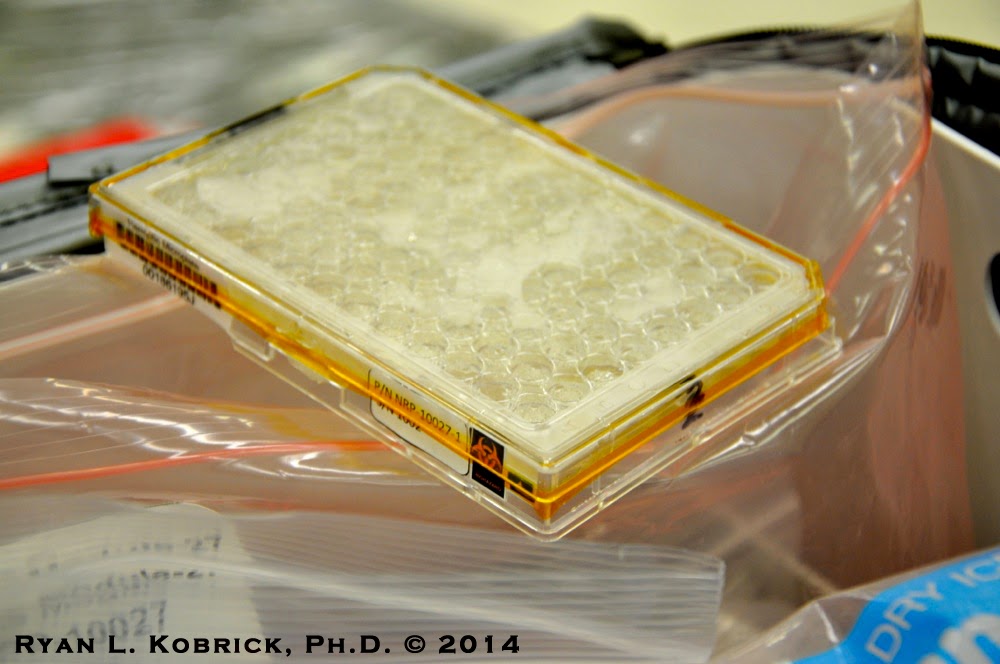
Project MERCCURI microbes on dry ice at the Space Station Processing Facility (SSPF) at +NASA's Kennedy Space Center 
The Edge Lady inspects Project MERCCURI making sure the astronauts won't cut themselves on the hardware
The Project MERCCURI microbes with sharp edges touched up
The payloads are safe behind Cold Stowage doors
Tony and I hosted a reception with NanoRacks for the winners at Bacchae Wine Bar in Cape Canaveral
Jen and I in front of SpaceX's Launch Complex 40
Project MERCCURI and HEART FLIES in front of their payloads that are sitting on top of the rocket, unfortunately the launch was scrubbed with 1-hour left on the clock (April 14)
Maybe one day I'll get to ride a rocket to the ISS
Darlene (Project MERCCURI), Mila (HEART FLIES) and I in the KSC Press Site. They both had a bunch of interviews before the actual launch
Finally! Up up and away!
A Photoshop version to show the rocket and dark smoke. It was a cloudy day and the contrast wasn't great. Project MERCCURI, NanoRacks and Space Florida hung out together at OSB-II to watch the launch
There she goes, on her way to the ISS
Project MERCCURI is VERY happy about the launch FINALLY going!
About the ISSRC (from the press release I helped write)
The Space Florida ISS Research Competition was designed to inspire innovation as well as provide unique research opportunities and access to the ISS. Winners of the Space Florida ISS Research Competition were selected by an independent panel of 14 judges representing a variety of NASA centers, renowned national academic institutions, payload developers and commercial companies with interest in microgravity research. Judges reviewed proposals based on their potential for developing ‘breakthroughs’ in basic research on materials, biology and the environment, as well as fostering a greater understanding of complex drugs and remedies to improve life on Earth. The full press release is available HERE.

About Project MERCCURI
University of California-Davis, SCISTARTER.com and ScienceCheerleader.com
The Project MERCCURI team (Microbial Ecology Research Combining Citizen & University Researchers) has been gathering microbial samples at a variety of public venues around the country including football and basketball games, as well as sites of historic interest. Microbes from those swab samples will be delivered to the ISS and the growth/behavior of these microbes will be compared with duplicate cultures in Earth-based labs. Additionally, crewmembers will take swap samples on the ISS, which will be analyzed to understand the microbial community present on Station. Leading scientists on this project include Dr. +Jonathan Eisen, Dr. +David Coil, Dr. Jenna Lang, Mr. +Russell Neches, Ms. Wendy Brown, Ms. +Darlene Cavalier and Mr. Mark Severance.

About HEART FLIES
Ohio State University, Stanford-Burnham Medical Research Institute and NASA Ames Research Center
The HEART FLIES (Heart Effect Analysis Research Team conducting Fly Investigations and Experiments in Spaceflight) payload will be studying the effects of spaceflight on the function, morphology and gene expression in fruit fly hearts. These results are part of an effort to understand the cardiovascular effects of spaceflight on humans and provide improved countermeasures and treatments for future astronauts. The research is being led by Dr. Peter H. Lee, Dr. Sharmila Bhattacharya, Dr. Rolf Bodmer and Dr. Karen OIorr.

April 18 Falcon 9  •  SpaceX CRS 3
Launch time: 1925:22 GMT (3:25:22 p.m. EDT)
Launch site: SLC-40, Cape Canaveral Air Force Station, Florida

The SpaceX Falcon 9 rocket launched the fifth Dragon spacecraft on the third operational cargo delivery mission to the International Space Station. The flight is being conducted under the Commercial Resupply Services contract with NASA. Delayed from April 6, Sept. 30, Nov. 11, Dec. 9, Jan. 15, Feb. 11, Feb. 22, March 1, March 16 and March 30. Scrubbed on April 14. See ourMission Status Center. [April 18]

Space!
Ryan

Thursday, April 10, 2014

NROL-67 Launch on Atlas 5 from CCAFS. Atlas' largest configuration!

A very smooth and quick afternoon launch. This is the largest configuration for the Atlas rocket family.

NROL-67 launching on an Atlas 541, ULA's biggest Atlas rocket configuration!
UP up and away! Wait, have I used that caption before? NROL-67, rolling away.

The official stats:
April 10 Atlas 5  •  NROL-67
Launch time: 1745 GMT (1:45 p.m. EDT)
Launch site: SLC-41, Cape Canaveral Air Force Station, Florida

A United Launch Alliance Atlas 5 rocket, designated AV-045, launched a classified spacecraft payload for the U.S. National Reconnaissance Office. The rocket flew in the 541 vehicle configuration with a five-meter fairing, four solid rocket boosters and a single-engine Centaur upper stage. Delayed from March 25 by range instrumentation issue. See our Mission Status Center. [April 10]

Space!
Ryan

Monday, January 6, 2014

#SpaceX launch of #Thaicom6 at #CCAFS

Right at the beginning of their launch window, +SpaceX successfully launched the Thaicom 6 satellite to GTO on a Falcon 9 ver 1.1. It was a loud launch and the rocket hit the cloud deck pretty quickly. We only caught a few glimpses of it through the clouds at the Cape Canaveral Air Force Station viewing spot. A great launch to start 2014! I adjusted the levels on a few images to highlight the awesomeness.


Jan. 6 Falcon 9  •  Thaicom 6
Launch window: 2206 GMT (5:06 p.m. EST)
Launch site: SLC-40, Cape Canaveral Air Force Station, Florida

A SpaceX Falcon 9 rocket launched the Thaicom 6 communications satellite. Thaicom 6 will provide C-band and Ku-band communications services across Southeast Asia and Africa. The rocket flew in the Falcon 9 v1.1 configuration with upgraded Merlin 1D engines, stretched fuel tanks, and a payload fairing. Delayed from August, October, Dec. 12, Dec. 20 and Jan. 3. See our Mission Status Center. [Jan. 6]

Space!
Ryan

Tuesday, December 3, 2013

SES 8 pastel-colored launch to the sound of car alarms

A very pastel-colored launch at the Cape tonight of ‪SES 8‬ on +SpaceX's ‎Falcon 9‬ to the sound of car alarms. Third time's a charm after a few scrubs!

SES 8 was a beautiful launch. Check out the video below to see how the brightness changes the focus of the camera.
Soaring into space.

SpaceX successfully launched the SES-8, a geostationary communication satellite operated by SES, with a Falcon 9 ver 1.1. This set of photos in this following video were taken on rapid fire, with a photo approximately ever 0.5 seconds, making the launch video near real time. The second half of photos are of the vehicle punching through the atmosphere.


The official stats:
Dec. 3 Falcon 9  •  SES 8
Launch window: 2241 GMT (5:41 p.m. EST)
Launch site: SLC-40, Cape Canaveral Air Force Station, Florida

A SpaceX Falcon 9 rocket launched the SES 8 communications satellite. SES 8 will provide Ku-band and Ka-band direct-to-home broadcasting and network services over the Asia-Pacific region. The rocket flew in the Falcon 9 v1.1 configuration with upgraded Merlin 1D engines, stretched fuel tanks, and a payload fairing. Delayed from July, August, October, Nov. 1, Nov. 12 and Nov. 22. Scrubbed on Nov. 25 and Nov. 28. Delayed from Nov. 30 and Dec. 2. See our Mission Status Center. [Dec. 3]

Space!
Ryan